By Mohit Patel, Marketing Specialist, Tailor Size Guide
How to Measure for a Bridesmaid Dress: Step-by-Step Guide
Found this guide useful? Share it with someone who needs it.
Add Tailor Size Guide as a preferred source on Google
To measure for a bridesmaid dress you need four numbers: bust, waist, hips and hollow-to-hem, taken with a soft tape while you wear the bra and shoes you'll wear on the day. Then compare them with the brand's own size chart, not your everyday size, and order the size that fits your largest measurement. A dressmaker can take a dress in, but usually can't let it out.
That last point matters more for bridesmaid dresses than almost anything else you'll buy. Many are made to order, they often can't be returned, and bridal and bridesmaid labels frequently use their own size charts that don't match high-street sizing. The ten minutes you spend measuring carefully now is what stops a panicked alteration appointment a week before the wedding.
Key takeaways
- Measure bust, waist, hips and hollow-to-hem, wearing your wedding-day bra and shoes.
- Use the brand's chart, not your usual size. Bridesmaid sizing often runs smaller than everyday sizing.
- Order for your largest measurement and have the dress taken in.
- Add shoulder width and arm measurements for sleeved or structured styles.
- Order early: made-to-order dresses can take weeks or months, plus time for alterations.
Why bridesmaid sizing catches people out
If you wear a size 10 in everyday clothes, it's natural to assume you'll order a 10. With bridesmaid dresses, that's often wrong.
- Different charts. Many bridal and bridesmaid labels size from their own body-measurement charts, and those often run smaller than high-street sizing. Plenty of people find they need a size or two larger than usual. The number on the label doesn't matter; the measurements do.
- Made to order. A lot of bridesmaid dresses are cut and sewn after you order, sometimes to the chart size and sometimes to your own measurements. That means lead times, and it usually means no returns.
- Structured fabrics. Satin, taffeta, crepe and lined chiffon don't stretch. A bodice that's an inch too small doesn't close.
- One dress, several bodies. In a bridal party everyone wears the same style, but bodies differ. A style that suits one bridesmaid's measurements may need more alteration for another.
So the rule is simple: measure, check the brand's chart, and trust the chart over the label.
What you need
- A soft tape measure. A metal tape or ruler won't work around a body.
- Someone to help. You can measure yourself, but bust and hollow-to-hem are far easier and more accurate with a second person. If you're on your own, our guide on how to measure yourself when alone has tricks that help.
- The bra you'll wear on the day, or one very similar. A padded or push-up bra can change your bust by an inch or more. If the dress has built-in support and you'll go braless, measure without a bra.
- The shoes you'll wear, or ones with the same heel height, for the length measurement.
- A notepad to write down every number, in both inches and centimetres if the brand uses cm.
Wear thin, close-fitting clothes or just underwear. Measuring over jeans or a jumper adds inches you won't have under the dress.
How to measure, step by step
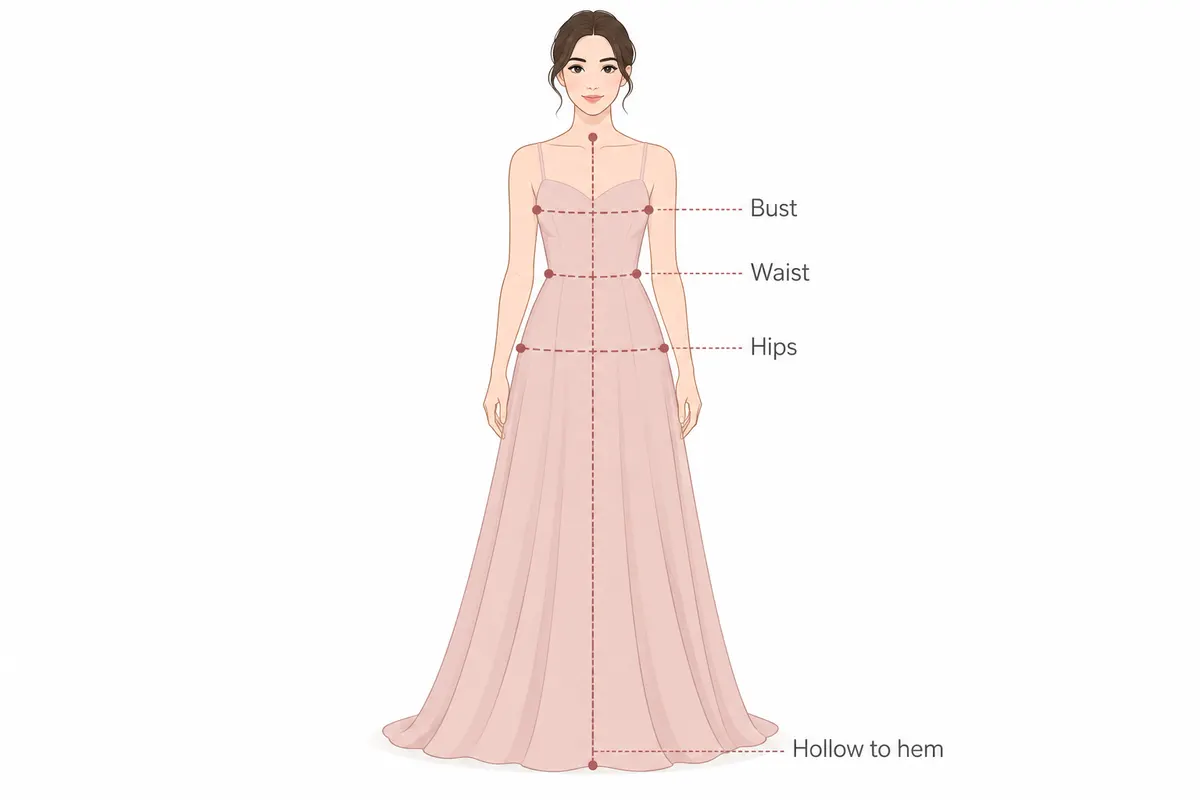
1. Bust
Stand straight with your arms relaxed. Wrap the tape around the fullest part of your bust, usually across the nipples, and around your back at the same level. Keep it level and snug, but not tight, and read it after a normal breath out. Check in a mirror that it hasn't dropped at the back. Our guide on how to measure your bust shows each step.
2. Waist
Find your natural waist, the narrowest part of your torso, usually about an inch above your belly button. A good trick: bend to one side, and the crease that forms is your natural waist. Measure around it, level and snug. Don't suck in. Our guide on how to measure your waist explains why this isn't the same as where your jeans sit.
3. Hips
Stand with your feet together and measure around the fullest part of your hips and seat, usually 7 to 9 inches below your natural waist. Keep the tape level all the way round. See how to measure your hips.
4. Hollow-to-hem
This is the measurement that decides the dress length, and it's the one people most often get wrong.
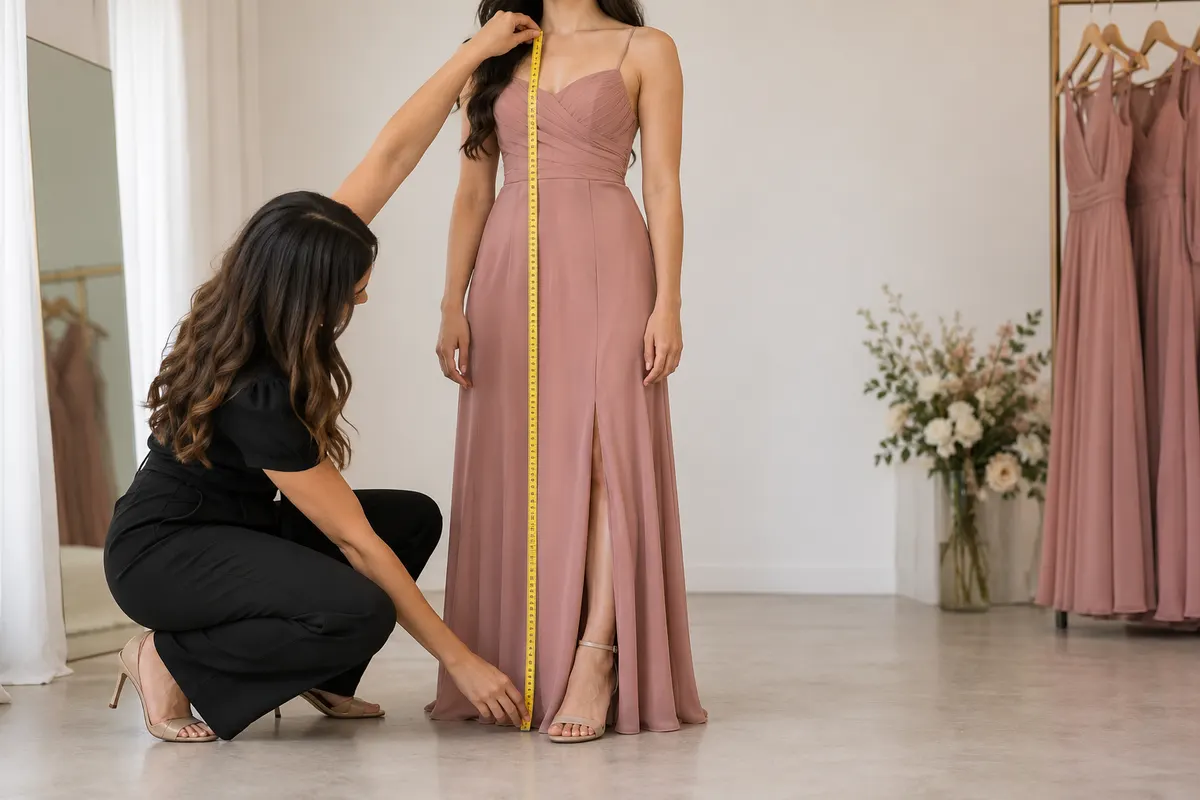
- Put on the shoes you'll wear at the wedding.
- Stand straight with your feet together.
- Have your helper place the end of the tape at the hollow at the base of your neck, the dip between your collarbones.
- Run the tape straight down the front of your body to where you want the hem to fall: the floor for a floor-length dress, or your chosen point for a midi or knee-length style.
- Read the number without bending your head to look down; that shortens the measurement.
Some brands ask for hollow-to-floor (always to the floor, and they work out the length for you) and others for hollow-to-hem (to where you want the dress to end). Read their instructions carefully and use their term.
5. Height
Measure barefoot, standing against a wall. Some brands use height to check that your hollow-to-hem makes sense, or to choose between regular, petite and tall lengths.
6. Extra measurements for some styles
Depending on the dress, the brand may also ask for:
| Measurement | Needed for | How to take it |
|---|---|---|
| Shoulder width | Sleeved, structured or off-the-shoulder styles | Across the back, from the bony point of one shoulder to the other. See how to measure shoulder width |
| Upper arm | Sleeves | Around the fullest part of the upper arm, relaxed |
| Armhole | Sleeves and fitted bodices | Around the shoulder through the armpit |
| Underbust | Empire-line and corset styles | Snug, directly under the bust |
| Bust point (apex) | Fitted bodices, custom dresses | From one nipple to the other |
| Back length | Long-torso or petite fits | From the base of the neck to the natural waist. See how to measure back length |
If you're buying a style with sleeves or a structured shoulder, don't skip shoulder width. It's one of the hardest areas to alter, and a sleeve that's too tight across the upper arm can't usually be let out.
Choosing your size from the chart
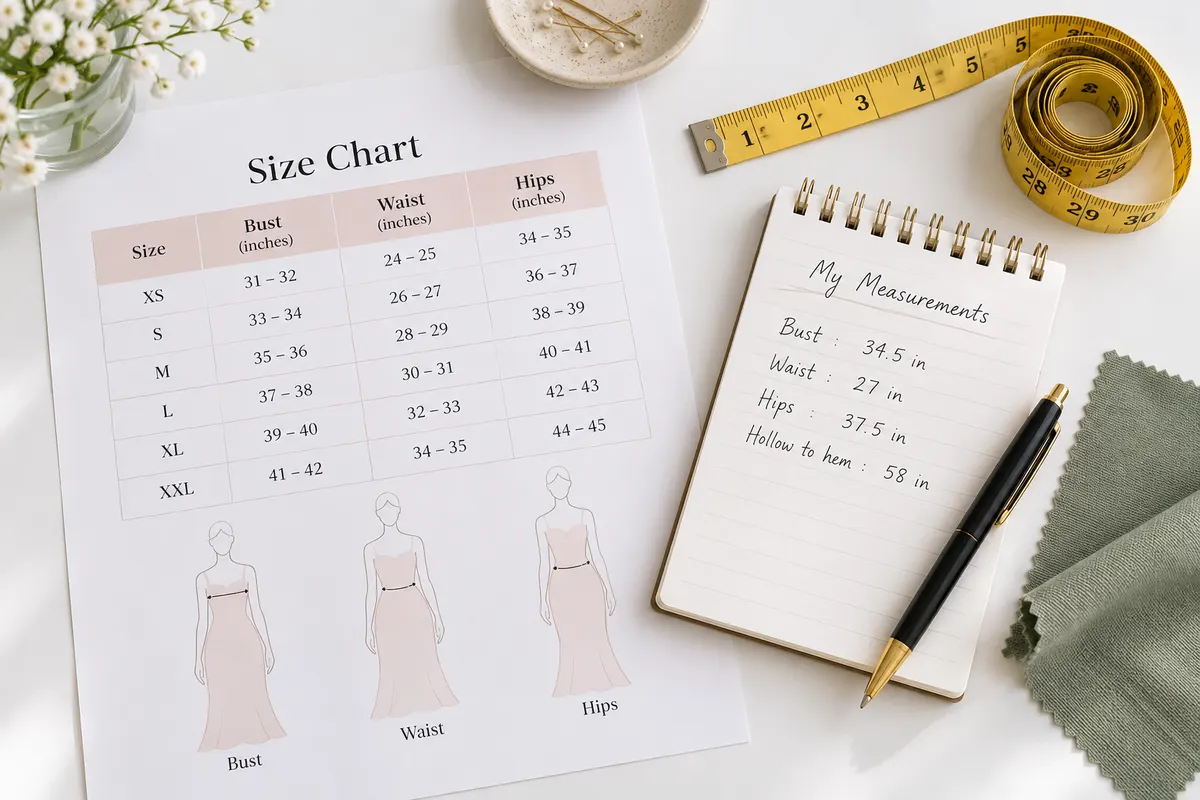
Write your numbers down, open the brand's size chart, and find where each measurement falls. It's very common to land in different sizes for bust, waist and hips. Here's how to decide:
- Find your largest size across bust, waist and hips. That's usually the size to order.
- Check what part of the dress is fitted. A fitted mermaid dress needs to fit your hips; an A-line dress with a loose skirt mainly needs to fit your bust and waist. Our dress size calculator explains which measurement matters for each silhouette.
- Size up, not down, when you're between sizes. Taking a dress in is a routine alteration. Letting one out depends on how much spare fabric is in the seams, which is often very little.
- If you're very different sizes top and bottom, ask the brand whether they offer custom sizing, or choose a style with a forgiving skirt or adjustable back, like a lace-up or corset back.
Custom sizing
Many bridesmaid brands offer custom sizing for an extra charge: you send your measurements and they cut the dress to them. It can save on alterations, especially if you're between sizes or have a long or short torso. A few tips if you go custom:
- Measure twice, ideally with two different helpers, and use the brand's exact method.
- Don't "adjust" your numbers for weight you hope to lose or room you think you'll need. Give the real numbers; the brand adds the right amount of ease.
- Expect custom dresses to be final sale. Check the policy before you order.
When to order, and why timing matters
Made-to-order bridesmaid dresses can take anywhere from a few weeks to a few months to arrive, and you'll want time for alterations afterwards. Many planners suggest ordering about four to six months before the wedding, but check the brand's stated production and shipping times and work backwards from the date.
A rough timeline:
| When | What to do |
|---|---|
| 6 months before | Choose the style; everyone measures and sends measurements |
| 4 to 6 months before | Order, ideally all at once |
| 6 to 8 weeks before | Dresses arrive; try on immediately |
| 4 to 6 weeks before | First alteration fitting |
| 1 to 2 weeks before | Final fitting, in shoes and underwear for the day |
Order the whole party together. Dresses dyed in different batches can come out in slightly different shades, so ordering at the same time helps everyone's colour match.
If you're pregnant, or might be by the wedding, tell the bride and ask the brand about maternity styles or ordering later. Measurements can change a lot over a few months; our guide on how to measure for maternity clothes helps.
Alterations: what's easy and what isn't
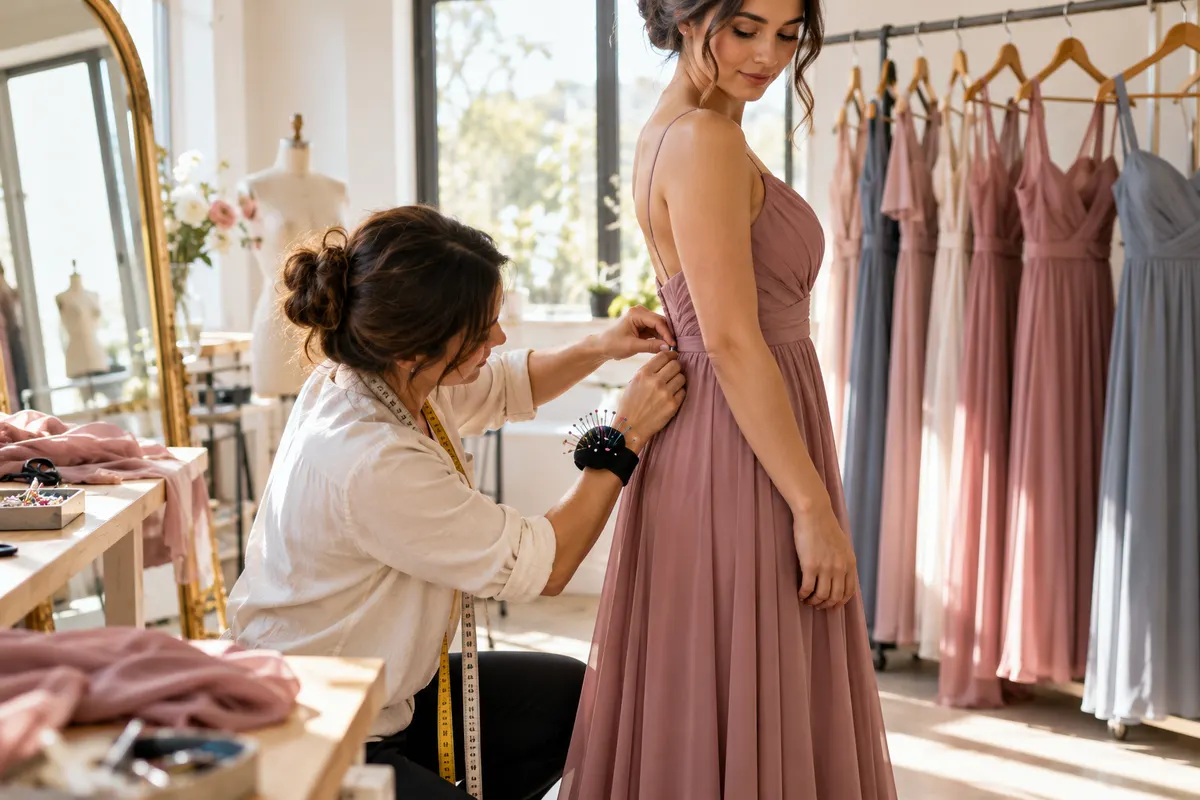
| Alteration | Usually |
|---|---|
| Hemming the length | Straightforward, though lace or beaded hems cost more |
| Taking in the bodice or waist | Straightforward |
| Adjusting straps | Easy |
| Taking in the hips | Usually fine |
| Letting out the bodice | Only if there's spare seam allowance; often very little |
| Lengthening the dress | Rarely possible |
| Changing sleeves or shoulders | Difficult and expensive |
So when in doubt: size up, and order long rather than short.
Returns and final sale
Because many bridesmaid dresses are made to order, they're often non-returnable. In the EU, for example, consumer law allows sellers to exclude goods made to the customer's specifications from the usual right to cancel. Rules differ by country and by retailer, so read the returns policy before you place the order, and keep a note of your measurements and the chart you used, in case there's a problem with the dress itself.
Common measuring mistakes
- Measuring over clothes. Adds inches you won't have under the dress.
- Using your everyday size instead of the brand's chart.
- Wearing a different bra from the one you'll wear on the day.
- Measuring hollow-to-hem in flat shoes for a dress you'll wear with heels, or the other way round.
- Pulling the tape tight to get a smaller number. The dress will be tight too.
- Rounding down. If you measure 36¼ inches, write 36¼.
- Guessing the measurements of someone who isn't there. Each bridesmaid should be measured in person, with help.
A quick checklist before you order
- Bust, waist, hips and hollow-to-hem written down, in the brand's units.
- Measured in the right bra and shoes.
- Extra measurements taken if the style has sleeves or a fitted shoulder.
- Size chosen from the brand's chart, at your largest measurement.
- Production and shipping time checked against the wedding date.
- Returns policy read.
- Order placed with the rest of the bridal party, if possible.
For the bride: making it easier for your bridesmaids
Send everyone the same measuring instructions, ideally a link to the brand's guide and this one, along with the order deadline. Ask each bridesmaid to send their measurements, not their usual size, so whoever orders can check them against the chart. And build in time for alterations; it's the step that's easiest to forget. For your own dress, see our guide on how to measure for a wedding dress and the wedding dress size chart.
Frequently asked questions
How do you measure for a bridesmaid dress?
Measure your bust at the fullest point, your natural waist, your hips at the fullest point, and hollow-to-hem from the base of your neck to where you want the hem, wearing the bra and shoes you'll wear on the day. Then compare with the brand's size chart.
Do bridesmaid dresses run small?
Often, yes. Many bridesmaid and bridal labels use their own size charts that run smaller than everyday sizing, so you may need a larger size than usual. Always go by the brand's measurements, not the size number.
Should I size up or down for a bridesmaid dress?
Size up if you're between sizes, and order for your largest measurement. A dress can be taken in, but there's usually little fabric to let it out.
What is hollow-to-hem?
The distance from the hollow at the base of your neck, between the collarbones, straight down to where you want the hem to fall, measured in the shoes you'll wear. Some brands ask for hollow-to-floor instead.
When should bridesmaid dresses be ordered?
Many planners suggest about four to six months before the wedding, because many dresses are made to order and you'll need time for alterations. Check the brand's production time and work back from the date.
Can I return a bridesmaid dress?
Often not, especially if it's made to order or custom sized. Read the retailer's returns policy before ordering.
Do I need to measure my shoulders for a bridesmaid dress?
For sleeved, structured or off-the-shoulder styles, yes. Shoulder width and upper arm are hard to alter, so take them if the brand asks.
Sources and standards
- Directive 2011/83/EU on consumer rights, Article 16(c)Allows sellers to exclude goods made to the consumer's specifications from the right of withdrawal in the EU.
- Bridal and formalwear measuring conventionsBust, natural waist, hips and hollow-to-hem measured in the wedding-day underwear and shoes are the standard measurements bridal and bridesmaid makers ask for.
- Tailor Size Guide measuring guidesStep-by-step guides for bust, waist, hips, shoulder width and back length used throughout this article.
Put the right size chart on every product
Tailor Size Guide adds per-product size charts, a cm/inch toggle, and a fit recommender to Shopify product pages, with no theme code.